
How to Care for Your Dryer to Keep Your Favorite Fabrics Looking New
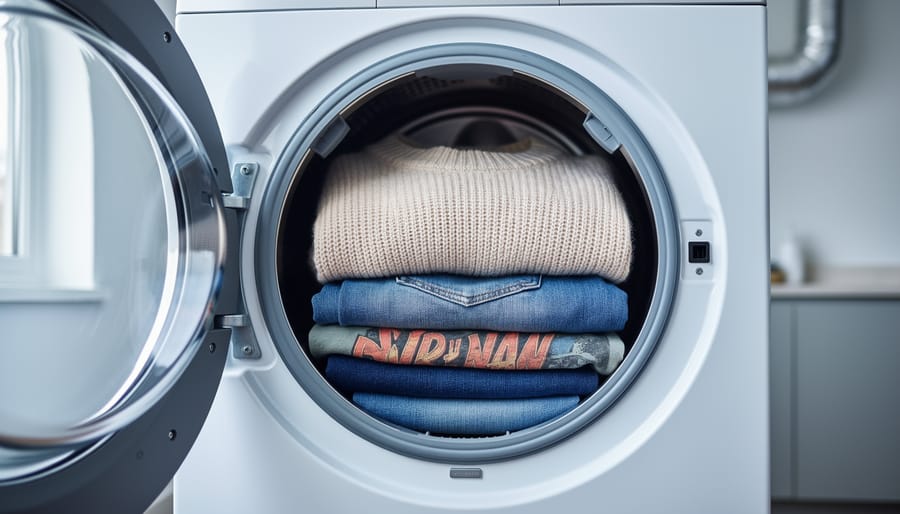
Your favorite cashmere sweater, those perfectly faded jeans, that vintage band tee you’d never part with, they all survive the wash only to face their biggest threat: the dryer. Protecting beloved fabrics starts with proper dryer maintenance, a simple practice that takes about 15 minutes monthly and can extend the life of your wardrobe investments by years. Professional services like dryer vent cleaning Spring Hill FL can handle deep maintenance, but everyday care is straightforward and completely in your control. When you choose the right accessories to complete an outfit, you’re curating a look you love. The same care should apply to how you maintain the appliance handling those pieces. Regular lint trap cleaning, vent inspection, and heat calibration prevent the fabric damage, shrinkage, and pilling that turn treasured items into donation pile candidates. Think of your dryer as part of your style routine, not just a utility.
The connection between appliance health and wardrobe longevity isn’t just practical. It’s about respecting the pieces that make you feel confident, creative, and authentically you. A well-maintained dryer runs cooler, dries more evenly, and handles delicate fabrics without the harsh tumbling that causes fiber breakdown. Whether you’re protecting silk blouses, activewear with technical fabrics, or that denim jacket you’ve worn for a decade, the steps ahead will show you exactly how to keep your dryer working for your wardrobe, not against it.
Why Your Dryer Matters More Than You Think
Most of us treat the dryer as a “set it and forget it” appliance, but every load you run affects whether your favorite pieces last for years or fall apart in months. The dryer isn’t just drying your clothes, it’s subjecting them to heat, friction, and lint exposure that can break down fibers, fade colors, and destroy the details that make your wardrobe special.
Heat is the biggest culprit. High temperatures weaken fabric fibers over time, causing that soft cashmere sweater to pill, stretchy denim to lose its shape, and vibrant prints to fade. Delicate materials like silk scarves or embellished tops can’t handle sustained heat at all, one wrong cycle and you’ve turned a fashion investment into a closet casualty.
Then there’s friction. Clothes tumbling against each other create mechanical stress that frays edges, snags embellishments, and wears down surface fibers. That beaded cardigan or sequined clutch bag you tossed in? The constant rubbing can pop beads, loosen threads, and dull finishes faster than you realize.
Lint buildup matters more than most people think, too. That fluffy stuff in your lint trap isn’t just random, it’s actual fabric fibers breaking off your clothes with every cycle. A clogged trap means longer drying times, which means more heat exposure and more damage. Plus, lint transfers between items, so that shedding towel can leave fuzz all over your black accessories or sleek evening wear.
What You’ll Need for Proper Dryer Care
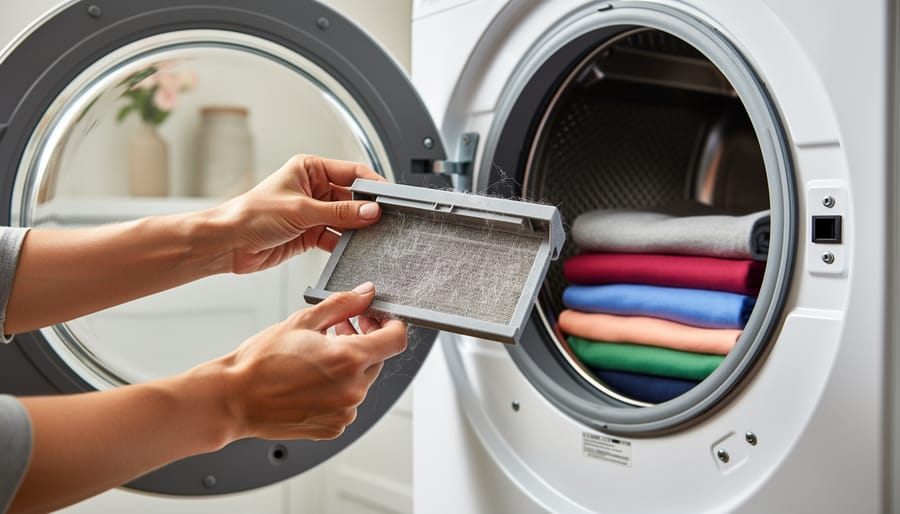
Gathering the right tools now saves you from wardrobe disasters later. Most of these items you probably already have at home, and the few you might need to pick up are inexpensive investments in keeping your favorite pieces looking fresh.
- Lint removal brush or screen cleaner: Gets deep into the mesh screen to remove fabric softener residue and tiny fibers that regular wiping misses
- Wool or rubber dryer balls: Replace dryer sheets while reducing drying time, static, and fabric wear from tumbling
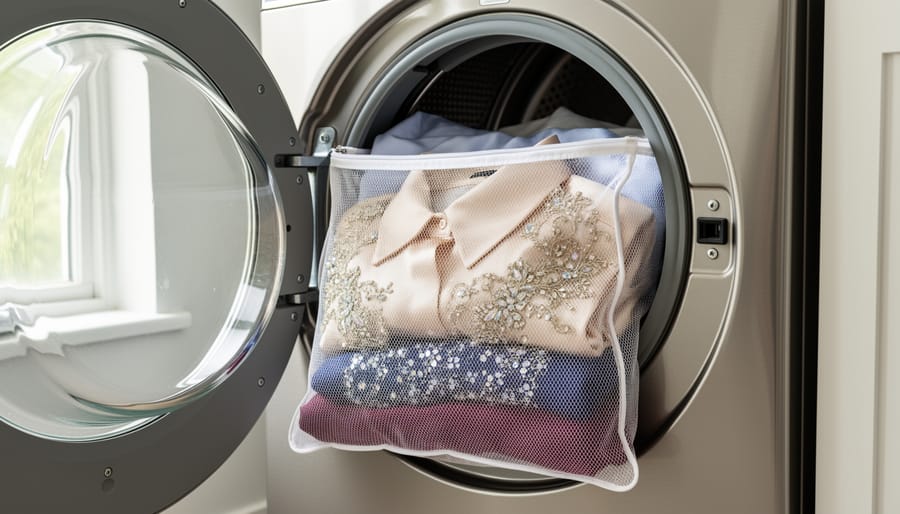
- Mesh laundry bags in multiple sizes: Protect delicate items, embellished pieces, and accessories from snagging and excessive heat exposure
- Microfiber cloths: Clean dryer drum surfaces and door seals without leaving lint behind or scratching finishes
- Vacuum with crevice attachment: Removes lint from hard-to-reach areas around the drum and exhaust opening
- Long flexible vent brush: Essential for cleaning the exhaust vent system where most dangerous lint buildup occurs
The mesh bags deserve special attention if you love accessories and detailed clothing. I keep several sizes handy because they’re absolute lifesavers for anything with beading, sequins, or delicate straps. Even a simple scarf with fringe stays intact when it’s protected from the aggressive tumbling action. The dryer balls might seem like a small addition, but they genuinely cut drying time while keeping fabrics softer than chemical-laden dryer sheets ever could.
Safety First: What to Watch Out For
Let’s be honest, dryers are workhorses we forget about until something goes wrong. But ignoring basic safety can put your favorite pieces (and your home) at risk. Lint buildup is the biggest culprit here. According to the U.S. Fire Administration, thousands of dryer fires happen each year, mostly because people don’t clean dryer vents regularly. That fluffy gray stuff blocking airflow doesn’t just slow down drying, it’s genuinely flammable.
Beyond fire hazards, watch for overheating that leaves clothes scalding to touch or damages heat-sensitive fabrics like synthetics and activewear. Your embellished tops, beaded accessories, and anything with sequins or delicate trim can snag, melt, or break in a too-hot drum. Check exhaust vents for restricted airflow (hot exterior surfaces are a red flag), and never ignore strange noises, vibrations, or clothes taking twice as long to dry. If your dryer trips the circuit breaker, shuts off mid-cycle, or feels hotter than usual on the outside, call a technician. Protecting your wardrobe starts with a safe, well-maintained machine.
Your Step-by-Step Dryer Care Routine
Step 1: Clean the Lint Trap Every Single Time
You’ve heard it a million times, but here’s why this actually matters for your wardrobe: that fuzzy lint isn’t just dryer debris. It’s tiny fibers from your clothes, breaking down with every cycle. When the trap fills up, airflow drops, heat builds, and your dryer works harder. That extra heat and tumbling time damage fabrics faster, colors fade, elastic stretches out, delicate knits pill.
Make it a non-negotiable habit: pull out the lint screen and swipe it clean before every load. Run your fingers across the mesh. If it feels slick or you notice a film, it needs a deep clean. Wet the screen, scrub both sides with an old toothbrush and a drop of dish soap, rinse thoroughly, and let it air dry. That residue comes from dryer sheets and fabric softener, and it blocks airflow just like lint does.
This two-minute task protects everything in your closet, from your everyday tees to that embroidered jacket you wear constantly. Clean trap, happier fabrics.
Step 2: Sort Fabrics by Weight and Care Needs
Sorting your laundry before it hits the dryer isn’t just about colors anymore. Grouping items by weight and care needs prevents your favorite pieces from getting damaged by heavier garments tumbling around with them.
Separate heavy items like towels, jeans, and sweatshirts from lightweight fabrics. Mixing them creates uneven drying where delicates get over-dried while thick cottons stay damp. Your silk blouse doesn’t stand a chance against the weight of wet denim.
Put embellished items, anything with beading, sequins, or delicate hardware into mesh laundry bags before drying. This protects both the embellishments and other clothes from snags. Same goes for bras, lingerie, and scarves that can twist or catch.
Some pieces never belong in the dryer at all: wool sweaters, structured blazers, leather or faux leather accents, and anything with “lay flat to dry” on the label. Set these aside immediately after washing. Your cashmere cardigan will thank you, and you’ll avoid that heartbreaking moment of discovering your favorite sweater shrunk three sizes.
Step 3: Choose the Right Temperature and Cycle
Your dryer offers multiple heat settings for a reason, different fabrics need different amounts of heat to dry safely without damage. The general rule: when in doubt, choose a lower temperature.
For everyday cottons and linens, medium heat works fine. But your fashion favorites, anything with embellishment, synthetic blends, or stretch, should get low heat or air-dry cycles. That means your yoga pants, that gorgeous sequined top, and any piece with elastic or spandex all need gentle treatment.
Delicate or permanent press cycles aren’t just marketing terms. They use lower heat and add cool-down periods that prevent wrinkles and reduce fabric stress. If you’ve ever pulled out a shrunken sweater or noticed a formerly-vibrant dress looking dull, excessive heat was likely the culprit.
For scarves, silk items, and anything you’d hesitate to iron on high heat, skip the dryer entirely or use the air-fluff setting with no heat at all.
Step 4: Use Dryer Balls and Skip the Sheets
Toss a few wool or rubber dryer balls into every load, they bounce around between fabrics, creating separation that allows hot air to circulate more efficiently. This simple switch means dryer balls reduce drying time by up to 25% while preventing that twisted, bunched-up mess that stresses seams and stretches out your favorite pieces. Meanwhile, ditch the dryer sheets. They coat fibers with waxy chemicals that build up over time, making fabrics less absorbent and leaving residue on your dryer’s moisture sensors so they can’t accurately detect when clothes are dry. For your silk scarves, cashmere sweaters, and anything with embellishments, that residue is especially problematic, it dulls colors and can trap heat against delicate materials. Dryer balls give you softer clothes without the gunky buildup.
Step 5: Don’t Over-Dry Your Clothes
Over-drying is one of the biggest threats to your wardrobe. That extra ten minutes in the dryer can shrink your favorite jeans, fade colors, weaken fibers, and turn soft fabrics stiff and brittle. The ideal moment to stop the cycle is when clothes feel barely damp to the touch, they’ll finish drying on hangers without the damage.
If your dryer has a moisture sensor setting, use it. These sensors detect when fabrics reach the right dryness level and shut off automatically, preventing the relentless heat that breaks down elastics, causes pilling, and makes cotton feel like cardboard. For delicate pieces and anything with embellishments, pull them out even earlier. A few minutes of air-drying preserves shape, protects hardware, and keeps your clothes looking like you just bought them instead of like they’ve survived a heat marathon.
Step 6: Clean the Exhaust Vent Seasonally
Here’s where most people drop the ball, and honestly, I did too until a repair tech scared me straight about lint buildup in the vent. Every three to four months, your dryer’s exhaust vent needs attention, not just the lint trap, but the actual tube that runs from your dryer to the outside of your home. Clogged vents force hot, moist air back into your dryer, which means longer drying times and increased heat exposure that breaks down your favorite fabrics faster. Worse, that trapped lint is a genuine fire hazard.
- Unplug your dryer and carefully pull it away from the wall to access the vent connection.
- Disconnect the vent hose from both the dryer and the wall duct, checking for any obvious blockages or damage.
- Use a vacuum with a hose attachment or a specialized vent brush to clean out the hose and the wall duct opening as far as you can reach.
- Go outside and locate your dryer’s exterior vent opening, removing the cover if possible to vacuum out accumulated lint.
- Reconnect everything securely, push the dryer back into place, and run a test cycle to ensure proper airflow.
If your vent runs more than a few feet or includes turns and bends, call a professional. They have tools to reach the entire length and clear stubborn buildup you can’t access yourself.
Special Care for Your Fashion Favorites
Let me be honest: I’ve learned some of these lessons the hard way. There was a vintage scarf I adored, hand-rolled silk edges, the most beautiful pattern, and one careless toss into the dryer on high heat left it stiff and sad-looking. Now I’m ruthless about protecting the pieces I truly love.
Your statement accessories and special fabrics deserve extra attention. Here’s what actually works:
Silk scarves and delicate wraps should never see the inside of a dryer. The heat wreaks havoc on silk fibers, causing them to lose that gorgeous drape and sheen. Roll them in a clean towel to absorb moisture, then lay flat to dry. Your favorite neck scarf will thank you.
Embellished tops and beaded pieces need mesh laundry bags if they must go in the dryer at all, though honestly, air-drying is safer. Heat can loosen adhesive on sequins and cause beads to crack. If you’re drying something with embellishments, use the lowest heat setting and remove it while still slightly damp.
Cashmere and fine knits are surprisingly resilient, but the dryer isn’t their friend. The tumbling action causes pilling and that sad, stretched-out look. Lay these flat on a drying rack instead. I keep a collapsible one in my laundry room specifically for sweaters.
- Silk scarves and wraps: Never tumble dry, roll in towel and lay flat
- Embellished tops: Air-dry preferred; if using dryer, mesh bag + low heat only
- Cashmere and fine knits: Always lay flat to dry, no exceptions
- Denim: Low to medium heat, remove while damp to prevent fading
- Items with hardware or chains: Air-dry to prevent metal damage and fabric tears
Denim can handle the dryer better than most special pieces, but lower heat preserves the color and prevents that overly-faded look. I pull my favorite jeans out when they’re still slightly damp, they finish air-drying to the perfect fit without shrinking.
Anything with chains, zippers, or metal hardware should air-dry. The metal heats up faster than fabric and can scorch or weaken the surrounding material. Plus, hardware banging around damages both the item and your dryer drum.
How to Know Your Dryer Care Is Working
You’ll know your dryer care routine is paying off when your clothes consistently come out soft, vibrant, and ready to wear. Check each load, fabrics should feel fluffy, not stiff or crunchy. Colors stay true instead of fading to sad, washed-out versions of themselves. Your favorite sweater fits the same way it did three months ago, with no mysterious shrinkage.
Static cling becomes a non-issue. If you’re not generating sparks when you pull out that silk blouse, you’re doing something right. Drying times get noticeably shorter when your machine runs efficiently, so a load that used to take an hour finishes in forty minutes.
Smell your clothes right out of the dryer. Fresh, clean scent? Perfect. Musty or odd odor? Time to reassess your vent cleaning schedule or check for hidden lint buildup.
After each maintenance session, run a test load and pay attention. If something feels off, longer drying, increased static, weird smells, adjust before damage accumulates. Sometimes the fix is simple: clean the sensor bars or replace worn dryer balls. Taking care of your machine means you won’t need to constantly revamp old clothes damaged by poor dryer habits.
What to Do Next
Now that you’ve got the basics down, here’s how to make dryer care a lasting habit.
Start by setting calendar reminders for your deeper maintenance tasks, vent cleaning every three to six months, lint trap deep-clean monthly. Your phone already reminds you about everything else; why not your wardrobe protection?
Take an honest look at your current routine. Are you checking pockets before tossing clothes in? Sorting by fabric weight? Small shifts now prevent big regrets later when a favorite piece comes out ruined.
Consider upgrading your tools. Quality wool dryer balls, a proper vent cleaning brush, and sturdy mesh bags for delicates aren’t expensive, but they transform how well your system works.
Build a quick mental checklist: lint trap clear, load sorted, temperature set, dryer balls in. Run through it each time, just like you’d freshen your look before heading out.
What’s your best fabric care trick? Drop it in the comments, we’re all learning together.
Your Dryer Care Questions Answered
How often should I deep-clean my lint trap?
Once a month, wash your lint trap with warm soapy water and a soft brush to remove fabric softener residue and oils that reduce airflow. Let it dry completely before reinstalling.
Is air-drying always better for my clothes?
Not necessarily. While air-drying is gentler for delicates and embellished pieces, some sturdy fabrics like towels and cotton tees actually benefit from tumble drying, which keeps fibers soft and prevents stiffness. The key is matching the method to the fabric.
Can I rescue clothes that shrank in the dryer?
Sometimes! Soak wool or cotton items in lukewarm water with hair conditioner for 30 minutes, then gently stretch and reshape while damp. This won’t work every time, but it’s worth trying on pieces you love.
Why do my clothes still smell musty after drying?
This usually means your dryer vent is clogged, trapping moisture and preventing proper airflow. Clean the vent thoroughly and check that the exterior vent flap opens freely when the dryer runs.
Should I clean behind my dryer?
Yes, pull it out every six months to vacuum lint buildup behind and underneath the machine. This hidden lint is a fire hazard and reduces efficiency.
Do dryer balls really make a difference?
Absolutely. They separate fabrics as they tumble, which increases airflow and cuts drying time by up to 25 percent while reducing wrinkles and static without chemical residue.
These questions come up constantly because dryer care feels overwhelming until you realize it’s just small habits repeated consistently. The musty smell question hits home for me, I spent weeks thinking my washing machine was the problem before discovering a lint-clogged vent was sabotaging everything. Once I cleared it, my favorite silk-blend tops stopped coming out smelling like damp basement.
The shrinkage rescue trick saved a cashmere cardigan I’d accidentally tossed in on high heat. I soaked it, stretched it gently while humming anxiously, and laid it flat to dry. It didn’t return to original size perfectly, but it went from unwearable to wearable, which felt like a win. Your mileage will vary depending on the fabric and how badly it shrank, but attempting a rescue beats tossing a beloved piece.
Taking care of your dryer isn’t just about keeping an appliance running, it’s about protecting the pieces that make you feel like yourself. That vintage scarf you found at the flea market, the sweater that gets all the compliments, the jeans that fit just right, they all deserve the same attention you give to choosing them in the first place. When you clean that lint trap, sort your fabrics thoughtfully, and choose gentler settings, you’re investing in your personal style and the wardrobe you’ve carefully built.
These small habits add up to clothes that last longer, look better, and continue to spark joy every time you wear them. Your favorite pieces can stay your favorites for years to come.
What’s your best fabric care tip, or what’s the biggest laundry lesson you’ve learned the hard way? I’d love to hear your stories.
Leave a Reply